August 2015 – September 2025
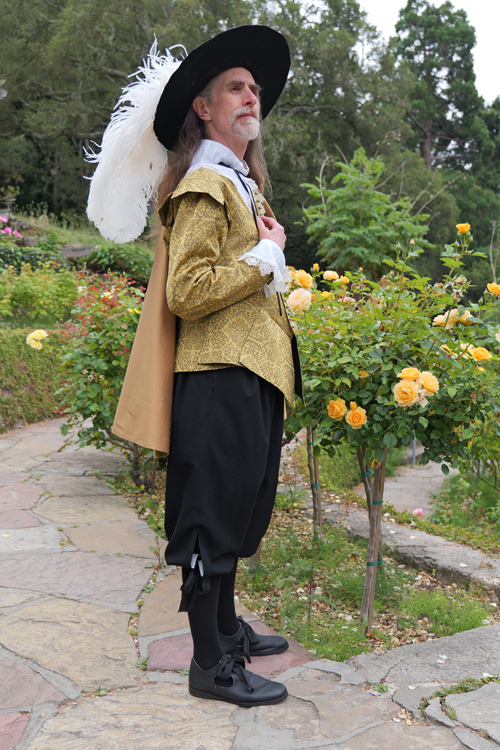
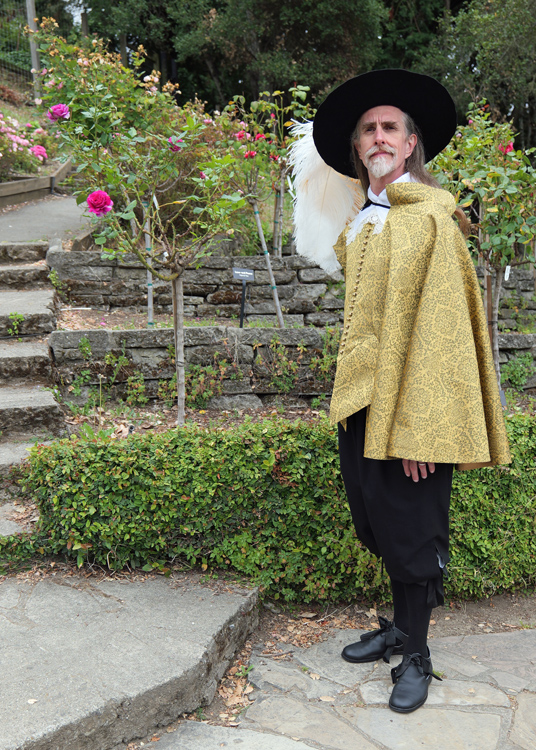
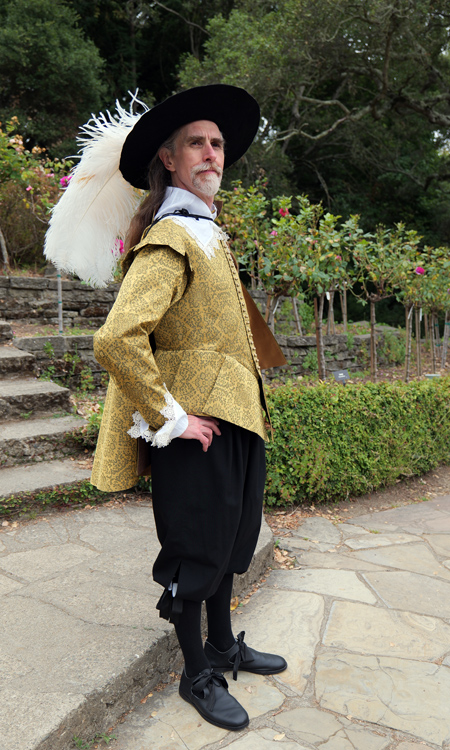
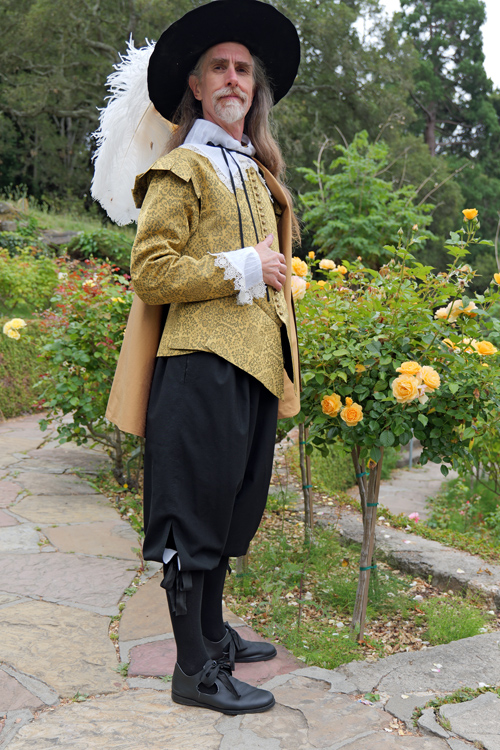
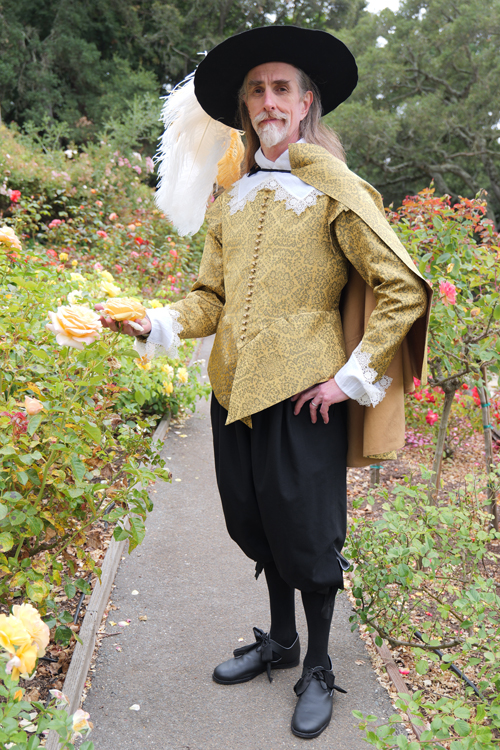
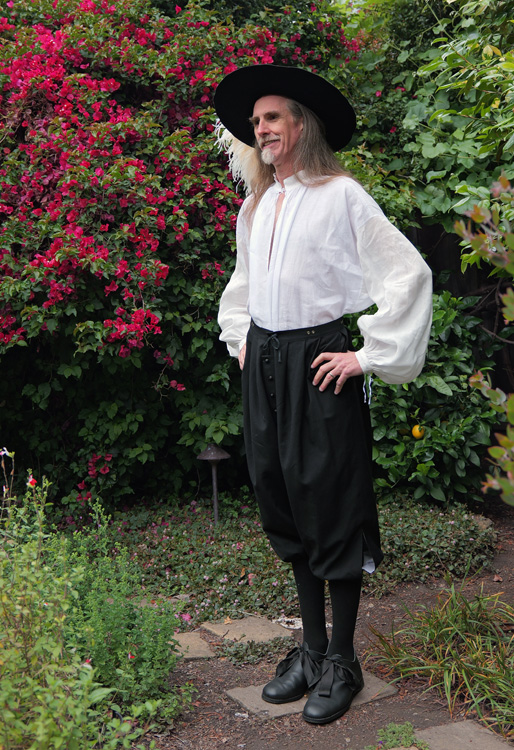
This late-1620s to early-1630s cavalier ensemble for Aaron took a decade to complete and it was never abandoned for more than one year at a time. Even if it’s not everything I’d hoped for, after years of plodding along, it is finished! Happily, Aaron really likes the outfit. In fact, he thinks it’s one of the best things I’ve made for him. He enjoys wearing it and likes the way he feels in the cavalier style. This was encouraging.
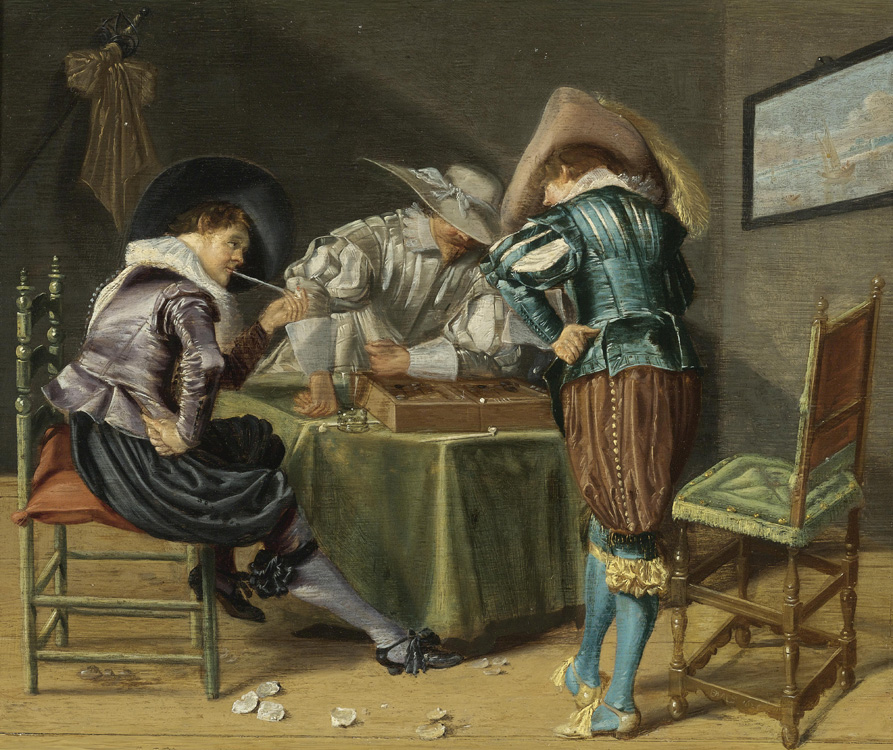
Some reference and inspiration images are assembled here:
My project coincided with the 2016 release of V&A’s, 17th Century Men’s Dress Patterns 1600-1630. I had so many doublet questions. What an outstanding resource — they were, of course, all answered. I poured over the red grosgrain and ivory satin doublets. (Was anyone else amused by step 23 on the red, the waist tab lapped differently from the rest?)
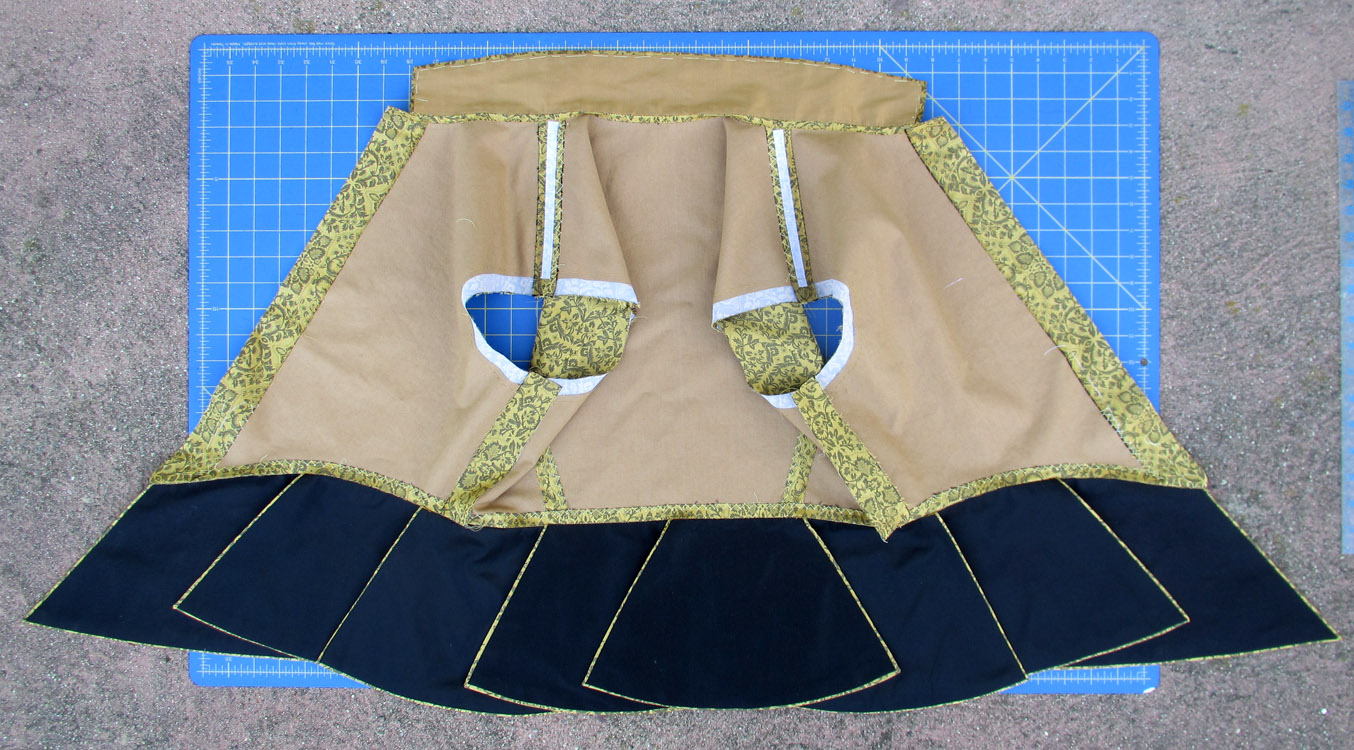
One of the difficult decisions was internal canvas construction. The choices are a bit overwhelming. After testing many versions, I ended up sticking with methods used in the past. A very light weight canvas was cut net. None of the extra support pieces or stiffening seen in 17th century extants were included. (All things I might do differently next time.) The waist tabs, collar and shoulder wings were made up separately, as finished units, then whipped to the body. (A tried-and-true method.) The in-progress doublet, with brown canvas exposed, is pictured below. Collar and tabs have been attached, shoulders and armholes are taped, and catch stitching is in progress.
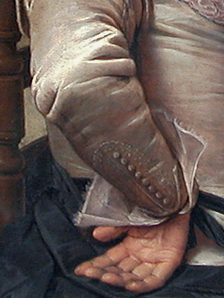
Musée du Louvre
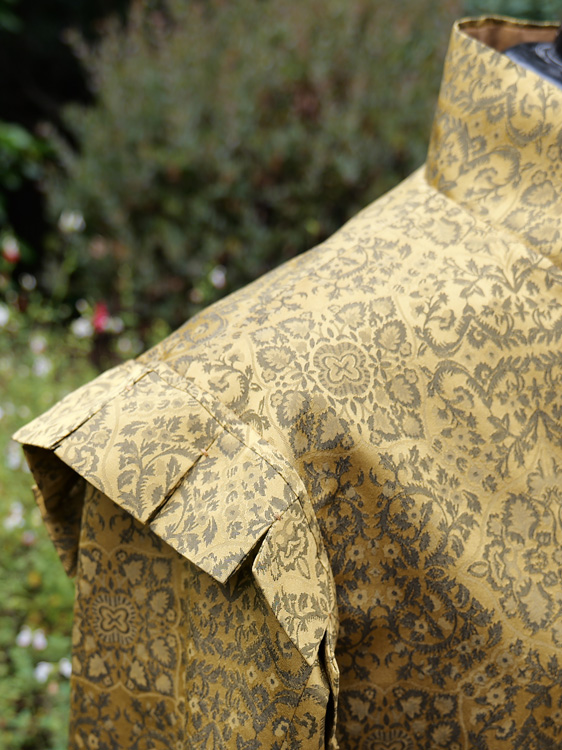
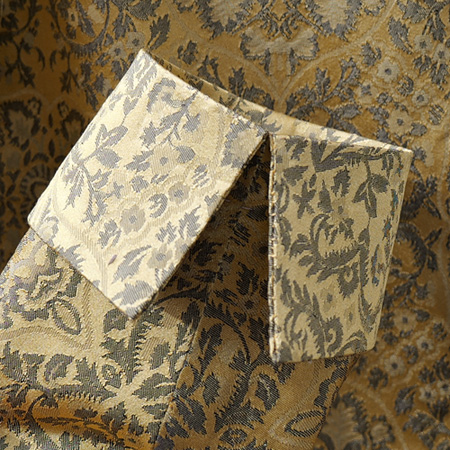
Aaron’s 1660s peasant pattern was used for the doublet. His waist tabs and turned-back cuffs are patterned after the red doublet in 17th Century Men’s Dress Patterns. Turn-back cuffs, which can be seen in the Willem van der Vliet, are intended to support the linen cuffs. Fancy paned shoulder wings (from the ivory doublet in 17CMDP), are bound along the top edge. The finished wings were placed onto the shoulders and sewn down. This method was inspired by the 1630s bodice wings in Seventeenth-Century Women’s Dress Patterns, and also avoided a lot of bulk in the armscye. Body slashes and paned sleeves were considered but then shelved (there was already enough to worry about).
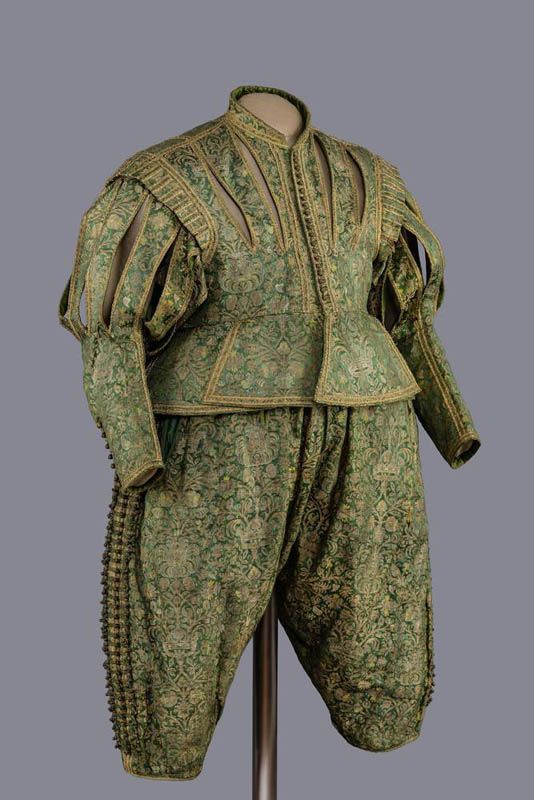
Staatliche Kunstsammlungen Dresden
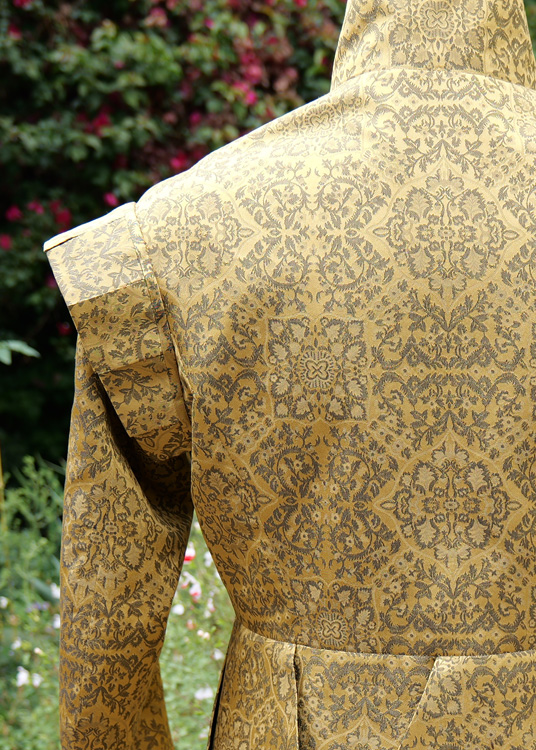
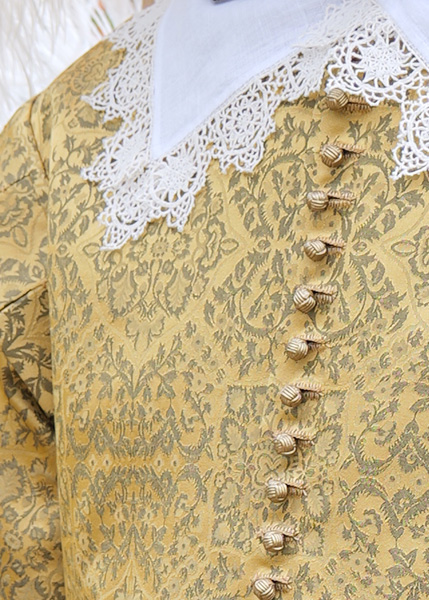
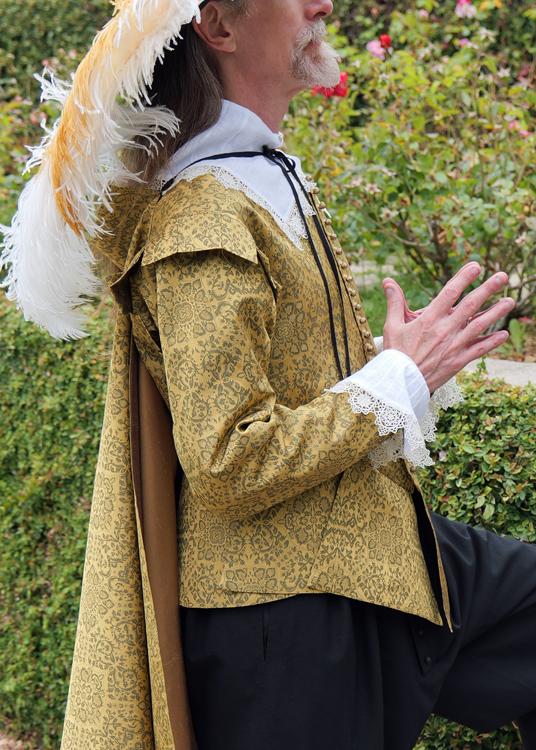
A period-looking trim would have been nice, but it sure is hard to source trim. Plus the amount needed…it’s a lot. As I was worried the doublet would end up boring in a solid color without trim, this silk damask was selected. The intricacy of the pattern reads a bit like the dreamy 1620s example above. Unfortunately, the doublet lines get lost in the busy design! (Ironically, trim would help.)
The doublet fabric was backed with a silk fusible to avoid stretching, snagging and fraying. The pattern was mirrored perfectly on both sides of the body and aligned horizontally all the way around. I used alternating motifs in the waist tabs. The shoulder wings were cut from random scraps (I’m not completely nuts). Black silk taffeta lines the tabs, and the doublet is lined in gold cotton lawn. A length of slubby gold shantung in my stash worked fine as lining for both collar and the 1/2 circle cloak.
The Met, NY

National Galleries Scotland
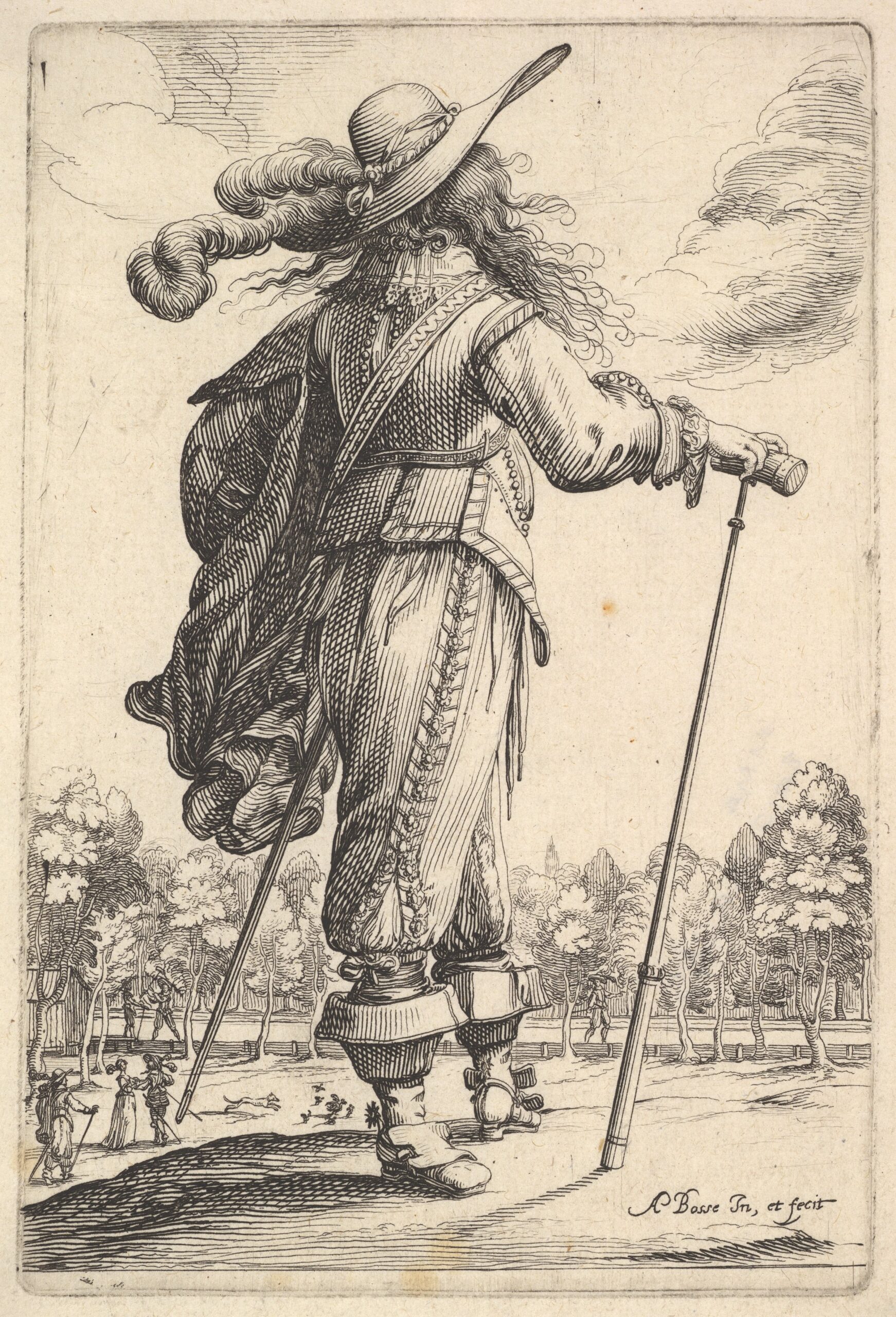
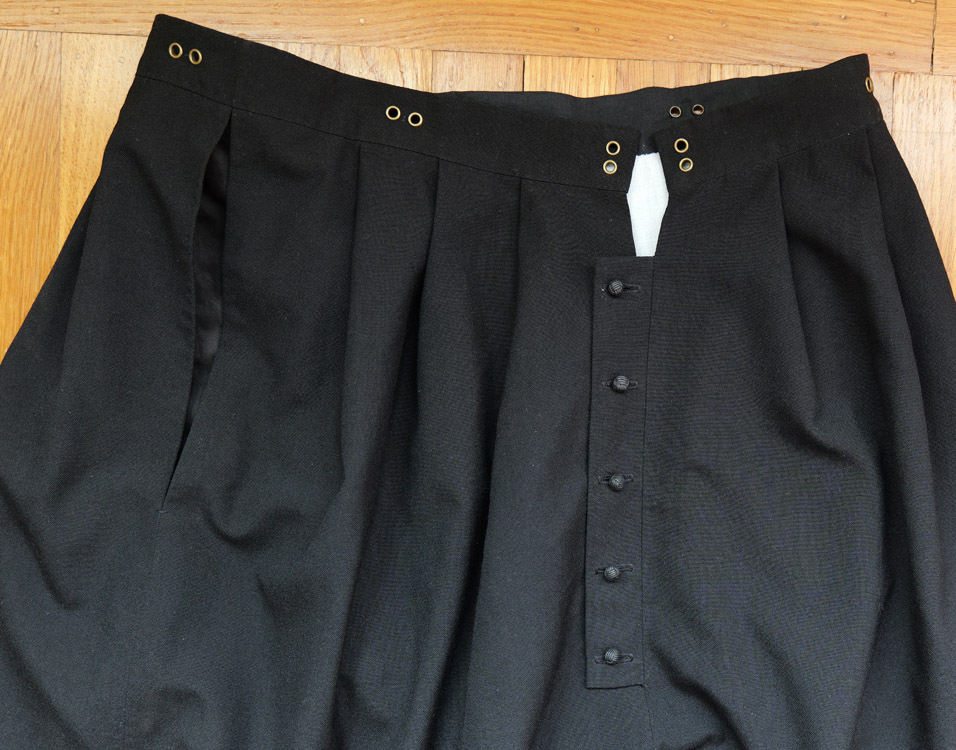
The breeches are a modified version of Aaron’s 1650 linen peasant pants, in tropical weight black wool from B. Black and Sons. They were modeled after the full, long breeches in Abraham Bosse’s 1629 etching. Two side seam pockets are in light weight cotton sateen. The buttons are 8mm Chinese knots, painted black with acrylic paint. Small metal eyelets are added to the waistband for lacing to the doublet. The breeches are fully lined with white cotton batiste. The waist and legs are pleated to bands. Leg openings in the artwork show some additional fabric. This suggests a very full lining which opens in a different location. Or a pair of under-breeches.
Vincent Briggs’ buttonhole tutorial was extremely helpful. Hand sewn buttonholes were added to the doublet. The buttons are also Chinese knots, slightly larger than those on the breeches, and painted bronze. A wool hat from JAS Townsend was decorated with Fancy Feather ostrich plumes. China silk ribbons were added, a nod to the elaborate period examples. The lace-trimmed collar and cuffs are pictured on the Renaissance Linens page.